
Inyan Wakan,
Washington Pavilion Visual Arts Center
This exhibition meditates on extraction in its fullest sense: extraction of land, of knowledge, and of cultural meaning. Drawing on his experience as an artist in residence at the Sanford Underground Research Facility in Lead, South Dakota, Two Bulls constructs a layered visual language that navigates the intertwined histories of the Black Hills. Through printmaking, sculpture, and installation, the exhibition examines how materials, histories, and identities are continually extracted, reframed, and presented. The work moves between quiet reverence and sharp confrontation, asking the viewer to remain within that tension rather than resolve it.
The exhibition is grounded in the paradox of the Homestake Mine itself. Once a site of massive gold extraction from Lakota land promised under the Fort Laramie Treaty of 1868, the mine has since been transformed into a subterranean laboratory where scientists search for answers to cosmic questions. The shift from mining gold to extracting knowledge from ancient granite becomes a central conceptual axis of the exhibition. This transition is not neutral; it extends a logic of removal and control, even as its language shifts from industry to inquiry.
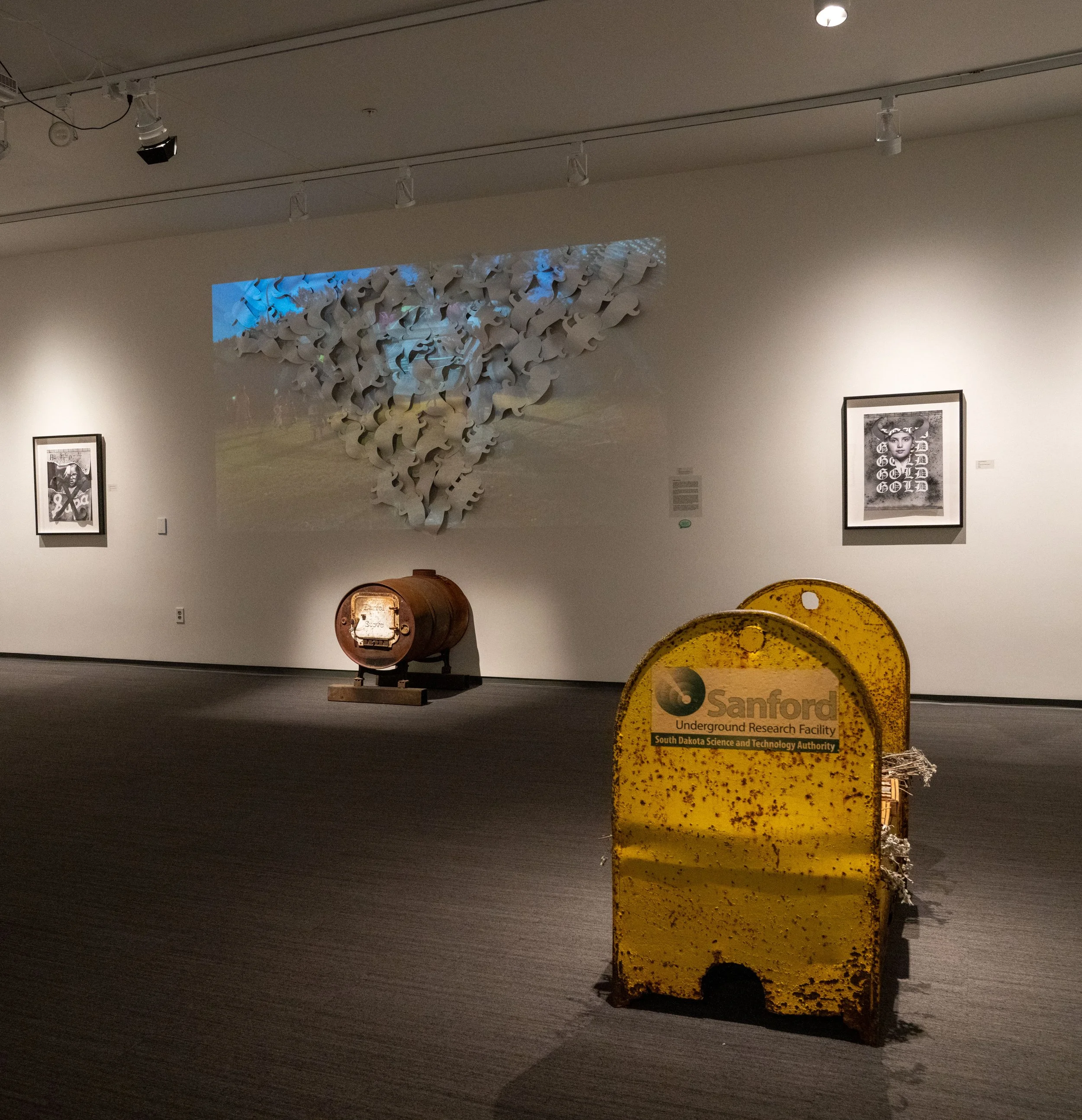
Image taken from Inyan Wakan: Artwork by Marty Two Bulls at the Washington Pavilion Visual Arts Center
Two Bulls’ prints operate as a critical visual archive. Through multi-layered compositions that combine photographic portraiture, graphic marks, and typographic elements, the artist identifies figures who occupy different positions within the region’s historical narrative. Some images reference Native individuals navigating systems of assimilation within Western culture, while others evoke figures tied to the industrial histories of mining and the contemporary scientific community now occupying the same geological space. These layered images create a visual tension between identities shaped by displacement, labor, and institutional power. The collaged surfaces remain intentionally unresolved, presenting a heavy-handed illustrative redaction of Native history in which the act of covering becomes the content itself. A compelling dialogue emerges between polite historical discourse and bold revision, at times revealing unmistakable patterns of whitewashing.
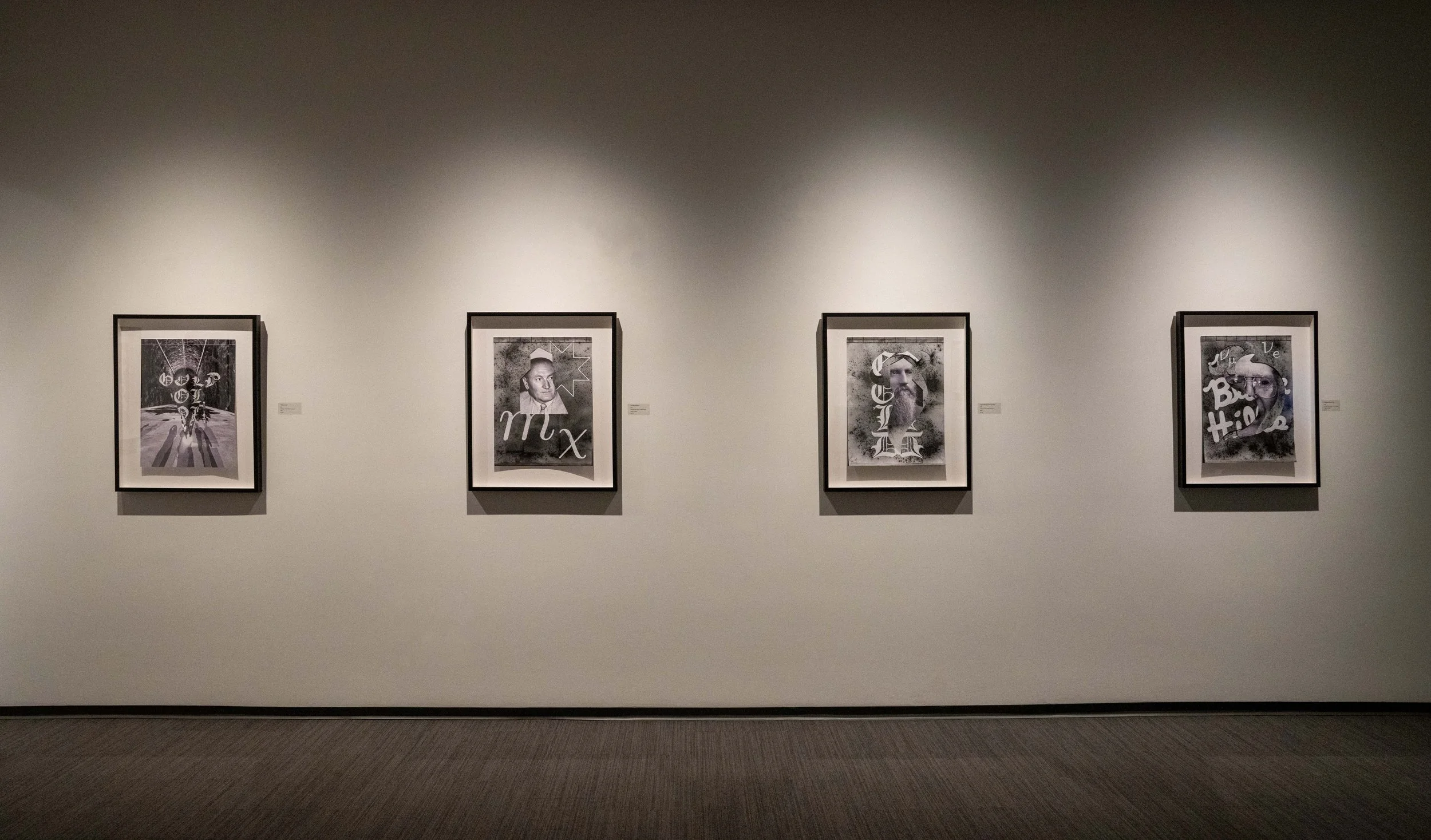
Image taken from Inyan Wakan: Artwork by Marty Two Bulls at the Washington Pavilion Visual Arts Center
Recurring across the exhibition is a striking iconographic form, the buffalo horn. In Two Bulls’ ceramic sculptures, this element appears biomorphically altered, elongated into forms that move like smoke and spirit simultaneously. The smooth lines of these objects carry a quiet authority and a nuanced presence that contrasts with the more declarative visual language of the prints. Emerging from abstracted, eroded bases, the forms feel both ancient and spectral. The buffalo horn, historically tied to sustenance and cultural identity for the Lakota people, becomes a mutable symbol that speaks to loss, persistence, and transformation.
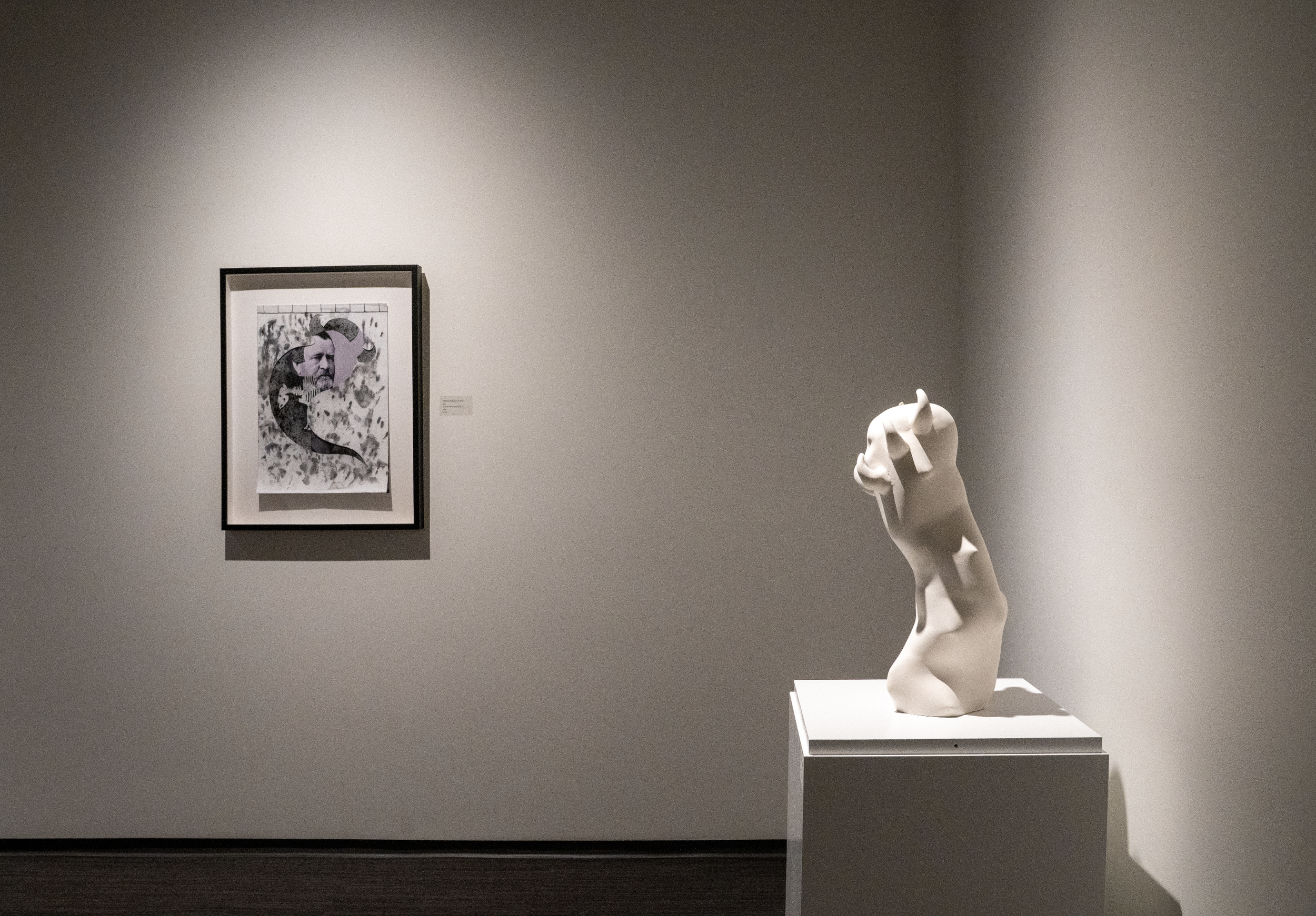
Image taken from Inyan Wakan: Artwork by Marty Two Bulls at the Washington Pavilion Visual Arts Center
The exhibition’s central installations extend this language of transformation into space. Positioned in the middle of the gallery, rusted mining carts are reconfigured as sculptural platforms or beds. Within them sit arrangements of stone, wood, and organic material. These objects function less as displays and more as burial monuments to the land and its history. If the mine once extracted gold from the earth, Two Bulls symbolically returns stone to a position of reverence. The rocks suggest sacred matter spanning past, present, and future, sitting quietly within the remnants of extraction machinery. This gesture interrupts the logic of industrial removal with something slower, more deliberate, and more human.
The exhibition operates beneath a larger, veiled condition. The corporate residency tied to Sanford remains ever-present, actively drilling into sacred land while simultaneously funding the intellectual and artistic inquiry taking place above it. That contradiction is not resolved but held in tension. The work positions the viewer within these overlapping systems, implicating contemporary participation in ongoing structures of extraction.
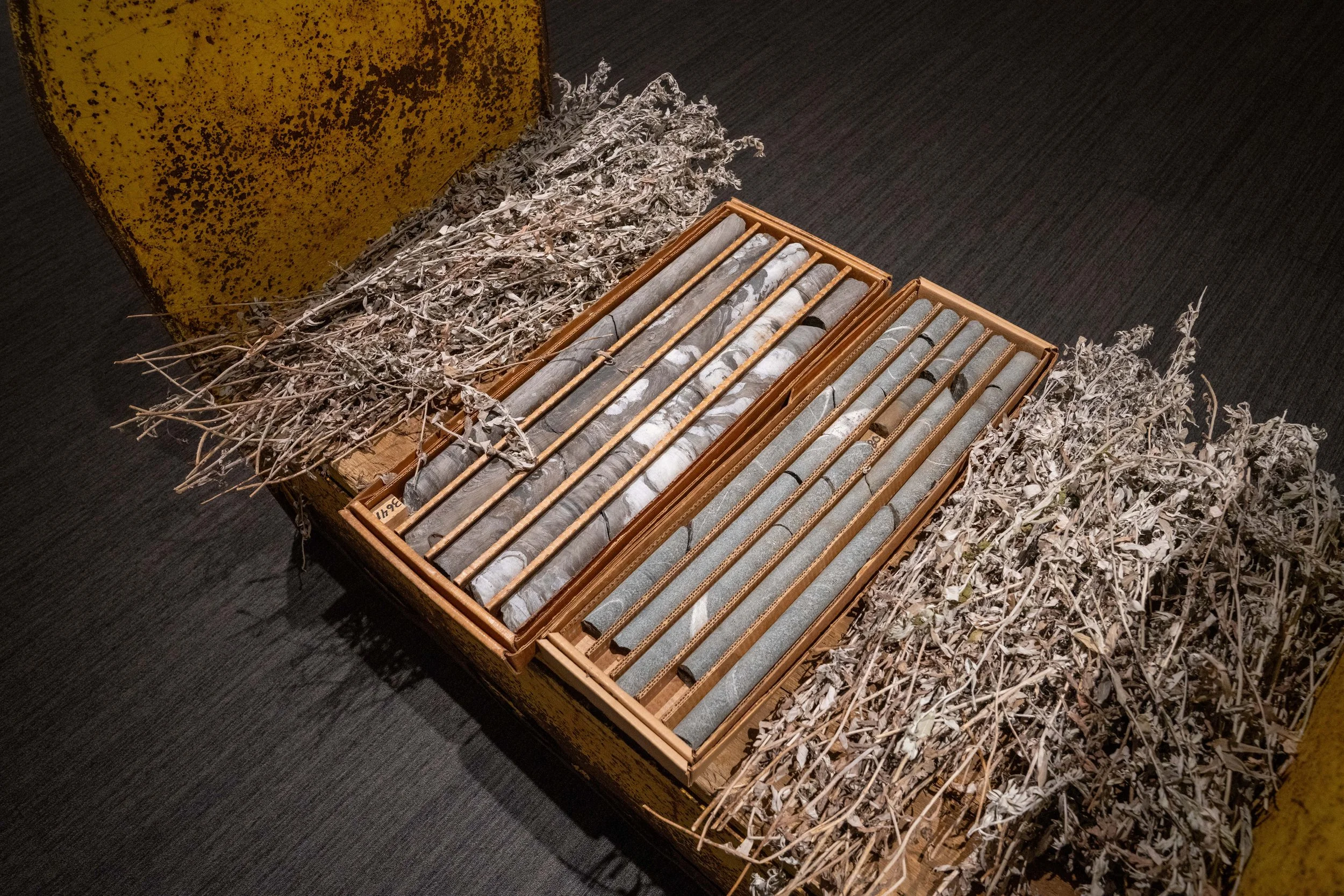
Image taken from Inyan Wakan: Artwork by Marty Two Bulls at the Washington Pavilion Visual Arts Center
Throughout Inyan Wakan, Two Bulls emphasizes the act of presentation itself. Materials are not simply displayed; they are staged in ways that foreground their histories and transformations. Prints layer images in the manner that histories accumulate. Sculptures stretch recognizable forms into unfamiliar silhouettes. Installations repurpose industrial objects to hold something sacred rather than something extracted. The Black Hills emerge not only as contested territory but as a site where multiple systems of belief intersect, including Lakota creation stories rooted in the land, industrial histories of resource extraction, and contemporary scientific investigations into the origins of the universe.
The exhibition stands as one of the most compelling collections of work presented in South Dakota. Its strength lies not in resolution but in its sustained movement between beauty and disruption, reverence and critique. Rather than offering closure, the work produces clarity, foregrounding a more difficult question: not only what has been taken from the land, but who holds the authority to define what remains.
Norse Art Space
Joe Schaeffer
Cody Henrichs